


If you follow a vegan or plant based diet, one supplement question comes up often: is creatine vegan? The short answer is yes in most cases, but the full answer depends on how the product is made, flavored, capped, and tested.
Key Takeaways
-
Most modern creatine monohydrate powders are vegan friendly because they are made as synthetic creatine, not extracted from animal products.
-
Creatine itself is vegan-compatible, but creatine supplements can become non-vegan if they contain gelatin capsules, dairy flavors, fillers, or other animal derivatives.
-
Vegans typically have lower baseline creatine levels compared to meat-eaters, as creatine is not naturally found in plant-based foods, necessitating supplementation for optimal levels.
-
High-quality vegan creatine products should say “vegan,” “plant based,” or “suitable for vegans,” and should be verified for vegan certifications and free from cross-contamination.
-
QUOR at quor.store focuses on hemp-derived wellness products, cannabinoids, and mushroom supplements; this guide helps plant based readers understand how creatine can fit alongside that lifestyle.

What Is Creatine and Why Do People Use It?
Creatine is a naturally occurring compound made from the amino acids arginine, glycine, and methionine. It is naturally produced by the body, with about 95% stored in skeletal muscle and about 5% in organs including the brain.
Creatine helps recycle adenosine triphosphate, or ATP, the fast energy system your body uses during high intensity exercise, sprinting, lifting, and other high intensity activity. Creatine helps to supply energy to our cells and tissues, making it critical for energy-demanding processes such as cognitive performance and muscle contraction.
People use creatine supplementation to:
-
Support muscle strength, power, workouts, and athletic performance.
-
Build muscle, improve body composition, and support muscle health.
-
Maintain energy levels, mental clarity, and brain function during stress, heavy workloads, or sleep deprivation.
Creatine is one of the most researched dietary supplements, with hundreds of trials showing positive effects in healthy individuals.
Is Creatine Vegan? Short Answer for 2026
Yes, but check the label. The creatine molecule is inherently vegan, and most commercially available creatine supplements, including those labeled as vegan, are made synthetically, ensuring they contain no animal products or by-products, making them suitable for vegans.
The phrase creatine vegan does not mean your body uses a special vegan molecule. It means the supplement form avoids animal ingredients in the active ingredient, capsule, flavoring, and manufacturing process.
Industrial creatine is usually made from non-animal chemical precursors that may come from mineral, petrochemical, or plant based ingredients. Potential problems are usually extras: gelatin, dairy-based flavors, or animal-derived processing aids. Look for “vegan creatine,” “plant based,” “vegan friendly,” or “no animal ingredients.”
How Is Creatine Made? Animal vs. Synthetic Sources
Historically, dietary creatine came from meat and fish. Today, creatine powder is not usually extracted from animal tissue because synthetic production is cheaper, cleaner, and scalable.
Modern creatine monohydrate is produced in controlled facilities through chemical synthesis. Creatine monohydrate is produced by reacting two chemical precursors, sodium sarcosinate and cyanamide. This process does not involve animal tissue, proteins, or fats.
-
Raw feedstocks can originate from petrochemical, mineral, or plant-based sources, but the final creatine molecule is chemically identical.
-
Vegan creatine supplements are typically synthesized in a lab, ensuring they contain no animal products or by-products, making them suitable for vegans.
-
The most common form of vegan creatine supplement is creatine monohydrate, which is created through a synthetic process that does not involve any animal derivatives.
Brands that explicitly market vegan creatine supplements are usually also checking additives and capsules. For an example of high-purity synthetic manufacturing, see Creapure’s manufacturing overview.
Types of Creatine Supplements and Which Are Usually Vegan
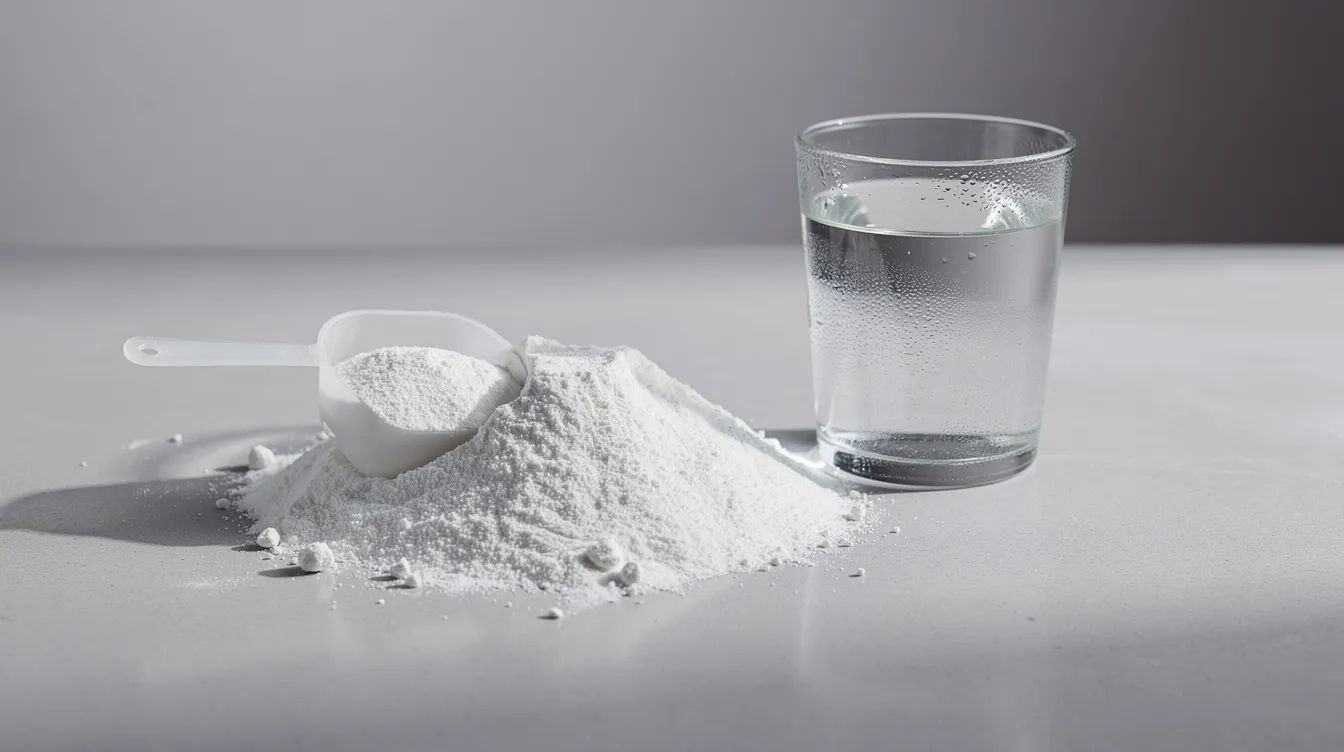
Creatine monohydrate remains the gold standard because it has the strongest research, lowest cost, and best long-term safety record. Plain, unflavored creatine monohydrate with no fillers is usually the simplest choice for vegans.
Other forms, such as creatine HCl, buffered creatine, and magnesium chelate, are also generally synthetic, but they have less evidence than monohydrate.
Here is what to check:
|
Product type |
Vegan risk |
|---|---|
|
Plain creatine powder |
Lowest risk; often vegan |
|
Capsules |
Creatine capsules may contain gelatin, which is derived from animal products, thus losing their vegan status unless specified as veggie caps |
|
Flavored blends |
May contain dairy, non-vegan sweeteners, or emulsifiers |
|
Pre-workouts |
Check every ingredient, not just creatine |
Powders are easier to verify because there is no capsule shell. Capsules should say cellulose, HPMC, pullulan, or veggie caps.
Creatine on a Plant Based Diet: Do Vegans Need It More?
Creatine is naturally found in animal muscle, so people who avoid animal products have much lower dietary intake. A vegetarian diet or vegan diet can still support performance, but plant foods provide little to no creatine.
Research suggests vegetarians and vegans often have lower muscle creatine and creatine stores than meat eaters, creating more room for supplementation benefits. A systematic review on creatine and vegetarian diets found lower creatine measures in plant-based groups.
Despite lower muscle creatine levels in vegans and vegetarians, studies have shown that this does not impair body composition, muscle strength, muscle function, or exercise capacity in individuals of various ages. Still, vegan creatine supplements can help individuals on a plant-based diet achieve the same levels of muscle creatine as non-vegans, supporting optimal athletic performance and physical health.
For vegan athletes and fitness enthusiasts, taking creatine may mean more reps, better sprint repeatability, and the ability to recover faster when paired with enough protein.
Cognitive and Brain Function Benefits of Creatine
Creatine is not just for muscles. It also supports brain function, especially when the brain needs more energy during stress, sleep deprivation, or demanding tasks.
Evidence shows creatine supplementation of 5g/day may provide small beneficial effects on cognitive performance, regardless of dietary pattern, and does not significantly limit cognitive function in those following a plant-based diet. Another way to say it: creatine supplementation of 5g/day may provide small beneficial effects on cognitive performance, regardless of dietary pattern.
Some studies suggest people with less creatine at baseline may respond more strongly. Research indicates plant-based individuals often experience greater improvements in strength and cognitive function from creatine supplementation. Supplementing with creatine can improve exercise recovery and cognitive performance for individuals with lower baseline creatine levels.
For productivity, studying, or creative work, creatine may be a simple daily add-on alongside functional mushrooms or select hemp-derived cannabinoids at quor.store. For sleep-loss research, see this 2024 creatine and sleep deprivation study.
Creatine for Athletic Performance and Muscle Health
Creatine is one of the most reliable performance aids for high intensity exercise, lifting, sprinting, combat sports, and CrossFit-style training. By increasing creatine stores in muscle cells, supplementation helps you do more total work before fatigue.
Regular creatine supplementation can help increase upper and lower body muscle strength, muscle power, muscle mass, and the ability to perform repeat sprints. Many studies report strength or power improvements in the 5–15% range, especially with resistance training and adequate protein.
For plant based athletes, this can be a great boost because it helps close the gap that may come from less creatine in the diet. It complements caffeine, beta-alanine, cordyceps, and post-workout relaxation products such as hemp-derived cannabinoids offered by QUOR.
How to Choose a Vegan Creatine Supplement
Label literacy matters. Even when creatine itself is vegan, the finished supplement may not be.
Look for:
-
“Vegan,” “vegan certified,” “plant based,” or “plant based ingredients.”
-
A single ingredient list: creatine monohydrate.
-
No gelatin; choose cellulose, HPMC, or pullulan capsules.
-
Third-party testing, purity certificates, or quality seals.
-
Packaging that fits broader vegan values, such as recyclable tubs or minimal plastic.
This is similar to how QUOR emphasizes lab-tested cannabinoid and mushroom products: the cleaner the label, the easier it is to trust what you consume.
Dosage, Timing, and Safety for Vegans
Creatine is considered very safe for long-term use in healthy individuals, with hundreds of clinical trials showing positive effects on strength, energy, brain function, and muscle maintenance as we age.
The standard recommendation for creatine supplementation is 3-5 grams per day, which is sufficient to maintain elevated muscle creatine levels for improved physical performance. Some people load with 20 grams per day, split into four doses, for 5–7 days, then use 3–5 grams daily. Others skip loading and simply take 3–5 grams daily.
You do not need to cycle creatine. Take it on training days and rest days. Timing is flexible, but taking it with carbs or protein may slightly improve uptake.
Common side effects are mild: water retention, small weight gain, or stomach discomfort from large single doses. People with kidney disease or medication concerns should talk to a healthcare professional before starting.
Creatine, Cannabinoids, and Mushroom Supplements: How They Fit Together
Many wellness-focused, plant based consumers combine supplements for different goals. Creatine supports cellular energy in muscles and brain. Hemp-derived cannabinoids such as CBD or Delta-8 are often used for relaxation, sleep, or stress management.
Mushroom supplements such as lion’s mane, cordyceps, and reishi, which QUOR features alongside cannabinoids at quor.store, may support focus, endurance, or resilience. Direct research on combining creatine with cannabinoids or mushrooms is limited, so introduce products gradually and follow each label.
Also remember that creatine is not on standard lists of banned substances, but athletes should still choose tested products to reduce contamination risk.
Practical Tips for Taking Creatine on a Vegan or Plant Based Lifestyle
The best plan is simple and consistent.
-
Mix creatine powder into water, plant milk, smoothies, oats, or a hemp, pea, soy, or rice protein shake.
-
Pair daily creatine with resistance training and enough protein; serious lifters often target 1.6–2.2 g/kg body weight.
-
Set a habit: breakfast, pre-workout, post-workout, or dinner.
-
Track body weight, performance, endurance, energy, and focus for 4–8 weeks.
If it dissolves easily and you take it daily, you are more likely to notice benefits.
FAQ
Is all creatine monohydrate automatically vegan?
The creatine monohydrate molecule is usually vegan because modern manufacturing is synthetic. However, not every finished product is vegan. Flavors, fillers, and capsules can include animal-derived ingredients. When in doubt, choose plain creatine monohydrate powder that clearly says vegan.
Can creatine replace protein on a vegan diet?
No. Creatine is not protein and does not provide amino acids for tissue repair. Protein supplies building blocks, while creatine helps muscles produce more energy and complete more work. Use both if your goal is to build muscle.
Does creatine make you lose your vegan status in competitions or organizations?
Usually no. Synthetic creatine is widely accepted in vegan athletic communities because it is not made from animal products. Rules can vary, so competitive athletes should keep product certificates and confirm guidelines with their organization.
Can teenagers on a plant based diet take creatine?
Research in minors is more limited than in adults. Teenagers should only consider creatine with guidance from a healthcare provider or sports dietitian. For most younger athletes, sleep, food quality, training, and hydration come first.
Is there a best time of day to take creatine for brain function?
Consistency matters more than timing. For cognitive function, take 3–5 grams daily for several weeks. Morning or midday dosing may feel best if you combine creatine with energizing supplements or want steady focus during work or school.



Leave a comment
This site is protected by hCaptcha and the hCaptcha Privacy Policy and Terms of Service apply.