

-
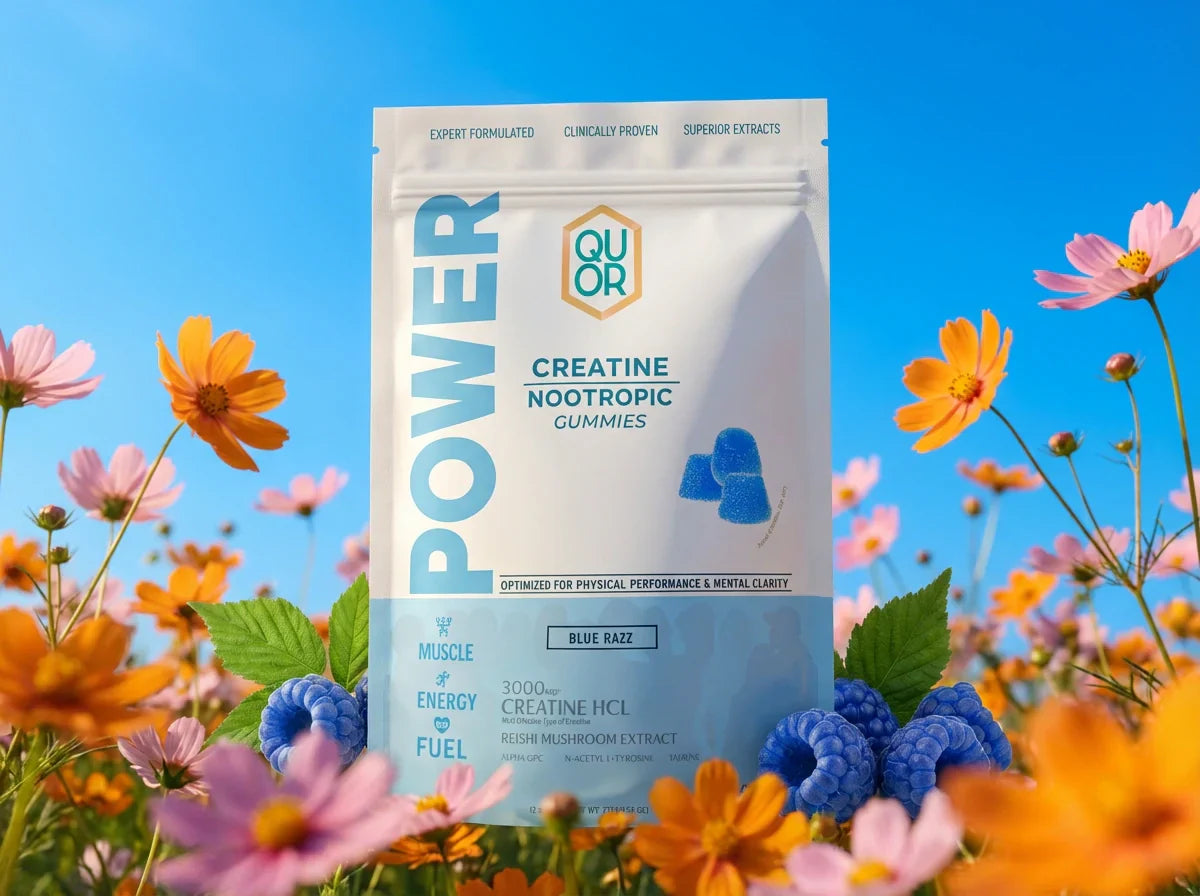
Creatine gummies can be effective if they deliver 3–5 g of verified creatine monohydrate per day, but many products are underdosed or poorly tested.
-
Creatine itself is a well-researched and scientifically supported supplement for strength, muscle growth, and some cognitive benefits—the main question is product quality and dose, not the gummy format.
-
Independent testing in 2023–2024 has found some brands with as little as 0.1 g per serving despite 5 g label claims, making many gummies essentially “expensive lollies.”
-
Unflavored creatine monohydrate powder remains the most reliable, cost-effective, and evidence-backed form, but high-quality gummies can work for people who value convenience and taste.
-
Before buying gummies, check the dose per serving, sugar content, third-party testing (NSF, Informed Sport, USP), and total cost per effective 3–5 g daily dose.
The sports nutrition world has seen an explosion of creatine gummies over the past few years. Walk through any supplement aisle or scroll through fitness influencer content, and you’ll find colorful, candy-like creatine products promising all the muscle-building benefits without the hassle of mixing powders.
But here’s the uncomfortable truth: many of these products are failing consumers. While creatine remains one of the most researched and effective ergogenic aids available, the delivery format matters far less than what’s actually inside the package—and that’s where things get complicated.
Let me walk you through what the science actually says, where the industry is falling short, and how to make an informed decision about whether creatine gummies deserve a spot in your gym bag.
What Is Creatine and How Does It Work?
Creatine is a naturally occurring compound synthesized from three essential amino acids—glycine, arginine, and methionine—primarily in your liver, kidneys, and pancreas. The body produces about half of its creatine supply through this internal synthesis, which is important for energy and muscle function. It’s not some exotic lab creation; your body naturally makes about 1 gram of creatine daily.
You also get creatine from protein rich foods. Beef, pork, salmon, herring, and even animal milk contain meaningful amounts. The average omnivore consumes another 1–2 grams daily through diet. Vegetarians and vegans, however, typically have 20–30% lower baseline creatine levels since they’re missing these dietary sources.
Creatine monohydrate is the most widely recognized and extensively researched type of creatine supplement.
How Creatine Powers Your Muscles
Here’s where the science gets interesting. Most of the creatine in your body is stored as phosphocreatine in skeletal muscle cells—and a smaller amount resides in your brain. This stored creatine acts as an energy reservoir, supporting both physical and cognitive activities. During high intensity exercise performance demands (think heavy squats, sprints, or explosive jumps), your muscles need adenosine triphosphate (ATP) fast. ATP powers muscle contractions, and creatine helps replenish ATP to sustain these contractions during explosive movements.
The problem? Your stored ATP only lasts about 2–3 seconds of maximal effort.
Phosphocreatine acts as a rapid backup generator. It donates a phosphate group to regenerate ATP almost instantly, allowing you to push harder during intense exercise before fatigue sets in. This is why creatine supplementation has such a direct impact on strength and power output. Creatine is a well-established ergogenic aid, known for enhancing muscle strength, power output, and recovery.
The Research Foundation
Creatine monohydrate has been studied since the early 1990s, with pivotal research showing a 33% increase in muscle creatine content after just 6 days of loading (20g/day). By the 1996 Olympic Games, athletes were already utilizing creatine supplementation to support intense physical activities.
The evidence-based benefits include:
-
Increased strength and power output during short-duration, high-intensity efforts
-
More reps at a given weight, translating to greater training volume
-
Improved lean muscle mass over weeks to months of consistent creatine supplementation
-
Potential cognitive benefits, particularly under sleep deprivation or mental fatigue
-
Enhanced muscle recovery between sets and training sessions
Here’s the critical point: nearly all of this research is on creatine monohydrate powder, not on gummies, drinks, or novel delivery forms.
Are Creatine Gummies Effective? (Short Answer Up Front)
Let me give you a direct answer: creatine gummies can be just as effective as powder if they contain adequate, stable creatine monohydrate and you hit a daily dose of roughly 3–5 grams. But many commercial gummies don’t meet this bar.
Your body doesn’t “care” whether creatine comes from powdered creatine, a capsule, or a gummy. Once absorbed, it’s the same molecule entering your muscle cells and brain. The mechanism of action—regenerating ATP, promoting cell volumization, supporting protein synthesis—doesn’t change based on delivery format.
The Problem: No Head-to-Head Research
As of late 2024, there are no large controlled trials specifically comparing creatine gummies versus powder on athletic performance or muscle growth. Most claims for gummies rely entirely on extrapolating from decades of monohydrate data.
This matters because the practical issues with gummies are significant:
-
Frequent under-dosing: Many products deliver only 1–2 g (or less) per serving
-
Creatine degradation: Heat and moisture during manufacturing can convert creatine to ineffective creatinine
-
Label inaccuracies: Independent testing has revealed alarming discrepancies between claimed and actual creatine content
What Makes a Gummy Actually Effective?
For a gummy product to genuinely work, it should provide a realistic path to 3–5 g/day. Some products offer 5–6 g of creatine per serving of 4–6 gummies—that’s approaching useful territory.
But if a gummy only delivers 0.1–1 g of creatine per day and you’re not compensating by eating an impractical number of pieces, it won’t meaningfully increase your muscle creatine stores. You simply won’t replicate the benefits seen in actual creatine research.
Creatine Gummies vs Powder: What Really Matters?
Both forms can work in theory, but they differ dramatically on cost, dose accuracy, and ingredient profile. Let me break down each comparison point with concrete examples.

Effectiveness and Bioavailability
Creatine monohydrate has approximately 99–100% bioavailability when taken orally. Studies using muscle biopsies and magnetic resonance spectroscopy have confirmed this exceptional absorption rate.
Here’s the key insight: if a gummy truly contains the labeled amount of creatine monohydrate, its biological effects should match powder at the same dose. The molecule itself doesn’t change based on whether it was mixed in water or chewed as candy. Your digestive system processes it identically.
Dosage Practicality
This is where the rubber meets the road. Most creatine powder products give you 3–5 g in a single scoop. Simple, predictable, effective.
Most creatine gummies? They deliver 1–2 g per serving—sometimes far less. To reach your target daily dose, you might need to consume 4–6 gummies, which means:
-
More sugar intake (or sugar alcohols)
-
More calories
-
Significantly higher cost
-
Greater chance of running out quickly
The math becomes problematic fast. Taking creatine supplements shouldn’t require eating half a bag of candy daily.
Cost Per Effective Dose
Let’s talk real numbers. As of 2024, a 1 kg tub of unflavored creatine powder costs roughly $25–40 and provides approximately 200 servings at 5 g each. That’s about $0.15–0.20 per effective dose.
A typical bottle of branded creatine gummies might cost $30–40 for 30–60 servings, often delivering only 1–2 g per serving. Even at the generous end, you’re paying $0.50–1.00+ per effective 5 g dose once you account for the extra gummies needed.
Powder is typically 3–5x cheaper per gram of actual creatine. That’s not a small difference if you’re taking creatine daily for months or years.
Taste and Convenience
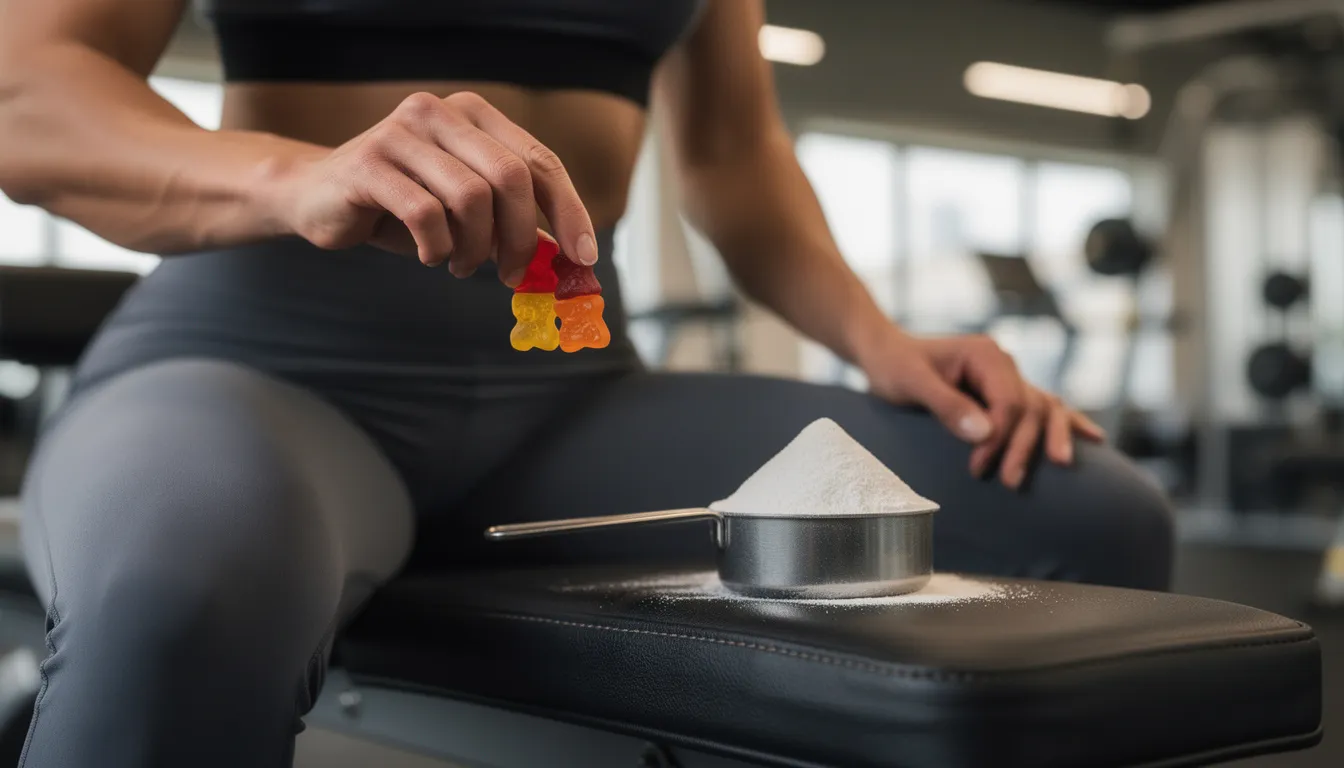
This is the gummy advantage. They’re portable, don’t need a shaker or water source, and are genuinely pleasant for people who hate mixing powders or dealing with the gritty texture of poorly dissolved creatine.
For travelers, busy professionals, or anyone who wants a grab-and-go option, the convenience factor is real. You can toss a few in your bag and take them at your desk, during a commute, or between meetings.
Powders, while bland in their unflavored form, mix easily into shakes, juice, or coffee. They also combine seamlessly with other dietary supplements or protein powders you might already be using.
Ingredients and Sugar Content
Unflavored creatine monohydrate powder is typically one ingredient: creatine monohydrate. That’s it.
Gummies, by contrast, often contain:
-
Sugars or sugar alcohols (sorbitol, maltitol, etc.)
-
Natural and artificial flavorings
-
Colorings and dyes
-
Gelatin or pectin as gelling agents
-
Preservatives for shelf stability
-
Sometimes additional ingredients like vitamins or other supplements
For people managing calories, blood sugar, gut sensitivity, or dietary restrictions (vegan, halal, kosher), these additions matter.
Regulatory and Labeling Risk
Creatine monohydrate powder has decades of manufacturing history. Companies know how to formulate it accurately, and third-party testing is well-established.
Gummies are newer, more complex to manufacture, and have already produced public scandals with under-dosed products. The regulatory landscape for dietary supplements in general allows significant latitude—but gummies seem particularly prone to quality issues.
Quality Concerns: Why Some Experts Call Them “Expensive Lollies”
In 2023–2024, a controversy erupted in the fitness world when dietitians and sports scientists began calling many creatine gummies “expensive lollies” (candies). The criticism wasn’t baseless.
The PUSH Gummies Scandal
One of the most striking examples involved PUSH creatine gummies. Independent laboratory analysis reportedly found approximately 0.1 g of creatine per serving—instead of the advertised 5 g on the label.
Let that sink in: consumers were getting about 2% of what they paid for. At that dose, you’d need to eat 50 gummies daily to match what a single scoop of powder delivers.
This wasn’t an isolated incident. A NOW report identified multiple gummy products with substantial creatine content converted to ineffective creatinine, or with critically low amounts relative to label claims. Some analyses suggest 40–50% of products degrade below label claims even at production, with further degradation on shelves.
Why Manufacturing Is Challenging
The gummy format creates inherent problems for creatine stability. The manufacturing process involves:
-
Heat exposure during cooking and setting
-
Moisture content that remains in the final product
-
pH conditions that can accelerate degradation
Under these conditions, creatine can convert to creatinine—a metabolically inactive compound your body simply excretes. By the time products reach store shelves and sit for weeks or months, the creatine content may have dropped significantly.
Marketing Tactics to Watch For
Some brands use savvy marketing to target specific demographics—like “femvertising” toward women or branding gummies as “bloat-free.” But here’s the reality: creatine draws water into muscle cells regardless of the delivery form. That’s actually part of how it works.
Be skeptical of:
-
Premium prices without corresponding evidence
-
Proprietary blends that hide actual creatine amounts
-
Claims like “next-gen creatine technology” or “micro-dosed formula” without citations
-
Alternative forms like creatine ethyl ester or creatine magnesium chelate being marketed as superior (they’re not)
-
Products promoting creatine hydrochloride or creatine HCl as dramatically better than monohydrate (research doesn’t support superiority)
The International Society of Sports Nutrition is clear: no alternative creatine form has outperformed standard creatine monohydrate in raising tissue levels.
Who Might Benefit Most from Creatine Gummies?
While powder is typically the default recommendation for how much creatine to take, certain people may genuinely prefer or adhere better to gummies.

Groups Where Gummies Make Sense
Texture-sensitive individuals: Some people genuinely cannot tolerate the grittiness of poorly-dissolved powder or the chalky mouthfeel of some brands. If this describes you, a verified gummy might improve your adherence.
Frequent travelers: If you’re constantly on the go and can’t carry large tubs or shakers, gummies offer portability. They don’t spill, don’t require mixing, and won’t raise questions at airport security.
Supplement beginners: People intimidated by measuring scoops, calculating doses, or mixing drinks might find gummies less overwhelming as an entry point.
Those with swallowing difficulties: If large capsules or tablets are problematic, chewable forms provide an alternative pathway to consistent creatine intake.
Busy professionals and students: A grab-and-go option you can take at your desk, during a commute, or between classes—without needing a water source—has genuine appeal.
The Critical Caveat
These individuals can still get full muscle-building and exercise performance benefits, but only if the gummy product is:
-
Properly dosed (3–5 g of creatine monohydrate per day achievable)
-
Third-party tested for accuracy
-
Used consistently enough to maintain muscle creatine stores
For vegetarians and vegans with higher resting creatine levels being lower than omnivores, form matters less than reaching an adequate daily dose. If gummies are vegan-friendly and properly formulated, they work. If they’re under-dosed, they’re just expensive candy.
How to Choose an Effective Creatine Gummy
Not all gummies are equal. Choosing wisely is crucial if you want results rather than just a tasty snack with your morning coffee.
Check Dosage Per Serving
This is step one. Look at the actual grams of creatine monohydrate per serving—not just “proprietary blend” weight or vague references to “creatine complex.”
Calculate how many gummies you’d need to reach 3–5 g per day. If that number is impractical (10+ gummies daily), the product isn’t designed to be effective—it’s designed to be purchased.
Most creatine gummies provide 1–5 g per serving. Aim for products where reaching 3–5 g daily requires no more than 4–6 gummies.
Prioritize Third-Party Testing
Look for certifications that indicate independent verification:
-
NSF Certified for Sport: Tests for banned substances and label accuracy
-
Informed Sport: Popular certification for athletes subject to drug testing
-
USP Verification: Indicates product meets quality and purity standards
This is especially important for competitive athletes who might face doping controls, but it benefits everyone by providing confidence in what you’re actually consuming.
Stick with Creatine Monohydrate
The form matters. Creatine monohydrate has the strongest evidence base. Alternative forms like creatine ethyl ester, creatine HCl, or proprietary “super creatine” blends haven’t demonstrated superiority in raising muscle creatine levels or improving performance.
Con-Cret’s creatine hydrochloride gummies have shown better-than-label creatine content in some accredited tests, but this remains isolated amid broader industry failures. Monohydrate is still the gold standard.
Scrutinize the Ingredients List
Watch for:
-
Excessive added sugars: Some products contain 3–5 g of sugar per serving
-
Sugar alcohols: Can cause digestive upset in sensitive individuals
-
Artificial colors: Unnecessary and concerning for some consumers
-
Gelatin vs. pectin: Important for dietary restrictions (vegan, vegetarian, halal, kosher)
-
Allergens: Soy, gluten, and other common allergens may be present
The fewer unnecessary ingredients, the better. Combines creatine with essential amino acids or other beneficial additions can be fine, but filler ingredients add nothing.
Evaluate Brand Transparency
Choose brands that openly share:
-
Manufacturing locations and practices
-
Batch numbers for traceability
-
Actual test results (not just claims of testing)
-
Clear dosing instructions for maintenance vs. loading
If a company hides this information or makes it difficult to find, that’s a red flag.
Calculate True Cost Per Effective Dose
Do the math yourself:
-
Find total grams of creatine in the bottle (grams per serving × number of servings)
-
Divide price by total grams
-
Multiply by 5 to get cost per 5 g effective dose
This allows fair comparison between gummies and creatine monohydrate gummies from different brands, or against standard powdered creatine options.
Safety, Side Effects, and Who Should Be Cautious
Creatine monohydrate has an excellent safety profile in healthy people when taken at recommended doses—up to 3–5 g per day long-term. This holds true regardless of whether you consumes creatine through powder or gummies.
Common Side Effects
Most side effects are mild and manageable:
-
Increased water retention and scale weight: Typically 1–3 pounds during initial weeks
-
A feeling of “fullness” in muscles: Actually part of the mechanism—creatine draws water into muscle cells
-
Occasional bloating or stomach cramps: Often mitigated by splitting doses or taking with food
The weight gain from creatine is primarily intracellular water in muscle tissue. This isn’t fat gain—it’s part of how creatine supports muscle performance and body mass improvements.
What the Research Shows About Kidney and Liver Concerns
Despite persistent myths, existing evidence does not support creatine damaging healthy kidneys when used responsibly. Studies lasting up to 5 years have shown no adverse effects on kidney function in healthy adults.
However, people with existing kidney disease or liver disease should only use creatine under medical supervision. The same applies to anyone with complex metabolic conditions.
Who Should Consult a Healthcare Provider First
-
Pregnant or breastfeeding women
-
Adolescents (evidence is less robust for those under 18)
-
People with bipolar disorder or other psychiatric conditions
-
Anyone with traumatic brain injuries (though research on creatine as a brain health enhancer shows promise)
-
Individuals with diabetes or insulin resistance
-
Those taking medications that affect kidney or liver function
Gummy-Specific Concerns
Taking creatine gummies introduces additional considerations:
-
Higher sugar intake: If you need multiple gummies daily, sugar calories add up
-
Blood glucose effects: Problematic for people with diabetes or prediabetes
-
Allergen exposure: Gelatin, soy, gluten, or colorants may be present
-
GI issues from sugar alcohols: Maltitol, sorbitol, and similar compounds can cause digestive upset
If you’re concerned about side effects of creatine, start at the lower end (2–3 g/day) and gradually increase while monitoring how your body responds.
Frequently Asked Questions
Are creatine gummies as effective as powder for building muscle?
They can be—but only if they deliver a similar daily dose of creatine monohydrate (around 3–5 g) and have been manufactured and stored properly to preserve creatine content. Many commercial gummies are under-dosed, so creatine monohydrate powder remains more reliably effective for support muscle growth and strength gains. The effects of creatine on muscle building are well-documented when dosing is adequate.
Do I need a loading phase if I use creatine gummies?
A classical loading phase involves taking creatine at 20 g/day for 5–7 days. With most gummies, this would require an impractically large number of pieces. The good news: most people can simply take creatine daily at 3–5 g and reach full saturation in about 3–4 weeks without loading. The endpoint (saturated muscle creatine stores) is the same—loading just gets you there faster.
Can I take creatine gummies on rest days or only on workout days?
Take them daily, including rest days. Creatine works by keeping muscle stores elevated over time, not by providing an immediate boost on training days. Enough creatine taken consistently maintains saturation, which is what drives the performance and athletic and exercise recovery benefits. Whether you incorporate creatine through popular creatine gummy brands or powder form, daily consistency matters most.
Are sugar-free creatine gummies better?
Sugar-free gummies can help reduce calories and avoid blood sugar spikes, making them preferable for many people. However, they often use sugar alcohols or intense sweeteners that upset digestion in some individuals. Effectiveness still depends entirely on actual creatine content—not just the sugar content. A sugar-free gummy with insufficient creatine is still ineffective.
What if I’m a non-responder to creatine—will gummies help?
About 20–30% of people appear to be “non-responders” because they already have high baseline muscle creatine levels or other individual factors. Using gummies instead of powder doesn’t usually change this. If 8–12 weeks of taking creatine supplements at 3–5 g/day hasn’t produced any measurable strength or improve performance benefit, you may simply not respond strongly to creatine in any form. Supplement companies can’t change your individual physiology.
The Bottom Line
Creatine remains one of the most thoroughly researched and effective dietary supplements available for strength, muscle strength, brain function, and cognitive function benefits. The molecule itself is a scientifically supported supplement with decades of evidence behind it.
The gummy format? It’s a delivery mechanism—nothing more, nothing less.
When properly formulated and dosed, creatine monohydrate gummies can work just as well as powder. The problem is that “properly formulated and dosed” describes a minority of products currently on the market. Many popular creatine gummy brands are under-delivering, overcharging, or both.
Before reaching for that colorful bag in the supplement aisle, do your homework:
-
Calculate how many gummies you’d actually need for 3–5 g daily
-
Check for third-party testing certifications
-
Compare cost per effective dose against simple creatine powder
-
Read the ingredients list for unnecessary additives
If convenience genuinely improves your consistency and you find a verified product, gummies can be a legitimate option. But if cost-effectiveness and reliability are priorities, unflavored creatine powder remains the clear winner—it’s been the gold standard since the 1990s for good reason.
Your muscles don’t care about packaging. They care about getting enough creatine, consistently, day after day. Whatever form helps you achieve that is the right choice for you.



Leave a comment
This site is protected by hCaptcha and the hCaptcha Privacy Policy and Terms of Service apply.