


-
Yes, you should usually take creatine on rest days to keep your muscle creatine stores saturated and ready for your next workout.
-
Creatine works by building up in your muscles over days and weeks, so daily use (including off days) matters more than exact timing around your workouts.
-
The typical daily dose is 3–5 grams of creatine monohydrate for most adults, with or without a loading phase, and this amount stays the same on rest days.
-
On rest days, timing is flexible—most people can simply take creatine with any meal they’ll reliably remember.
-
Healthy adults generally tolerate creatine daily without issues, but people with kidney problems should speak to a doctor before starting creatine supplementation.
What Is Creatine and How Does It Work?
Creatine is a naturally occurring molecule produced primarily in your liver, kidneys, and pancreas from three amino acids: glycine, arginine, and methionine. Once synthesized, it travels through your bloodstream and gets stored in your muscles as phosphocreatine, where it serves as a rapid-access energy reserve for short, explosive activities like heavy squats, sprints, or jumps.
Here’s how creatine works in simple terms: during intense muscle contraction, your muscles burn through ATP (adenosine triphosphate), the primary energy currency for high-intensity efforts. Phosphocreatine donates a phosphate group to ADP (adenosine diphosphate), rapidly regenerating ATP so you can push through a few more reps or maintain sprint power for another few seconds. This entire energy system operates primarily during efforts lasting under 30 seconds.
Your body typically produces about 1–2 grams of creatine per day through natural synthesis. If you eat an omnivorous diet, foods like beef, pork, and fish contribute roughly another 1–2 grams daily. Vegetarians and vegans, however, get very little creatine from food sources, which is one reason research suggests these groups often see larger benefits from supplementation.
When you take creatine supplements, you can raise your total muscle creatine stores by approximately 10–40% beyond baseline levels, depending on your diet and starting point. Untrained individuals typically hold about 120–140 mmol/kg of dry muscle mass, while supplementation can push this toward 150–160 mmol/kg.
Once your muscles are fully saturated with creatine, the practical benefits become clear:
-
More reps at a given weight
-
Slightly greater strength and muscle mass gains over time
-
Better recovery between high-intensity sets
-
Improved exercise performance during repeated explosive efforts

Should You Take Creatine on Rest Days?
The short answer is yes—if you’ve decided to supplement with creatine, you should take creatine daily, including on rest days, to maintain saturation and experience all the benefits consistently.
Creatine’s effects depend on your overall muscle creatine levels, not on taking it immediately before or after your workout. When you skip creatine on off days, your stored creatine levels gradually decline over time. Your muscles lose approximately 1.5–2% of their creatine stores per day through non-enzymatic degradation to creatinine, which gets excreted in your urine. This depletion happens regardless of whether you’re training or resting.
Without consistent intake, your muscle creatine stores can drop significantly within 4–6 weeks, essentially negating the cumulative benefits you’ve built up. Expert consensus from organizations like the International Society of Sports Nutrition emphasizes that daily dosing is optimal for maintaining peak phosphocreatine levels and supporting ongoing muscle recovery. Consistent creatine intake also supports optimal sports performance, including improvements in endurance and recovery across a variety of athletic activities.
Even on rest days, creatine supports several recovery processes:
-
Restoring phosphocreatine levels depleted from previous workouts
-
Supporting protein synthesis through mTOR signaling pathways
-
Maintaining cellular hydration that optimizes metabolic processes
-
Reducing markers of muscle damage between training sessions
Taking creatine on rest days doesn’t waste the supplement or blunt your recovery. It’s simply part of the long-term loading and maintenance phase that makes creatine supplementation effective. Your muscles don’t distinguish between training days and off days when it comes to creatine utilization—daily activities, walking, and even cognitive tasks all draw on your ATP-phosphocreatine system.
How Much Creatine to Take on Rest Days?
The standard maintenance dose for healthy adults is 3–5 grams of creatine monohydrate daily, and this dose does not change on rest days. Your muscles need the same daily replenishment whether you’re hitting the gym or recovering on the couch.
There are two common approaches to creatine supplementation:
|
Approach |
Daily Dose |
Duration |
Time to Saturation |
|---|---|---|---|
|
Loading Phase |
20 grams/day (4 × 5g doses) |
5–7 days, then maintenance |
5–7 days |
|
No Loading |
3–5 grams/day |
Continuous |
3–4 weeks |
During a creatine loading phase, rest days are treated exactly like training days. You continue the higher daily dose (typically 20 grams split into four 5-gram doses) throughout the 5–7 day loading period, regardless of your training schedule. This approach rapidly saturates your muscle creatine stores—research shows increases of 20–40% in total creatine content during this phase.
After the loading phase, you switch to a lower maintenance dose of 3–5 grams daily to maintain muscle creatine levels. This lower maintenance dose is sufficient to keep your stores topped off, even if you only train 3–4 days per week. The maintenance phase accounts for the 1.5–2% daily turnover, keeping your muscles ready for your next workout.
Most research supports creatine monohydrate as the most effective and bioavailable form. While other forms like micronized creatine or creatine HCL offer slightly better solubility (5–10% improved uptake and potentially less GI distress), they provide identical efficacy at equivalent doses.
Best Time to Take Creatine on Rest Days
On rest days, timing is largely irrelevant. Unlike pre workout stimulants like caffeine, creatine doesn’t provide an immediate energy boost—its benefits depend entirely on long-term tissue saturation levels. This means the exact hour you take creatine on off days matters very little.
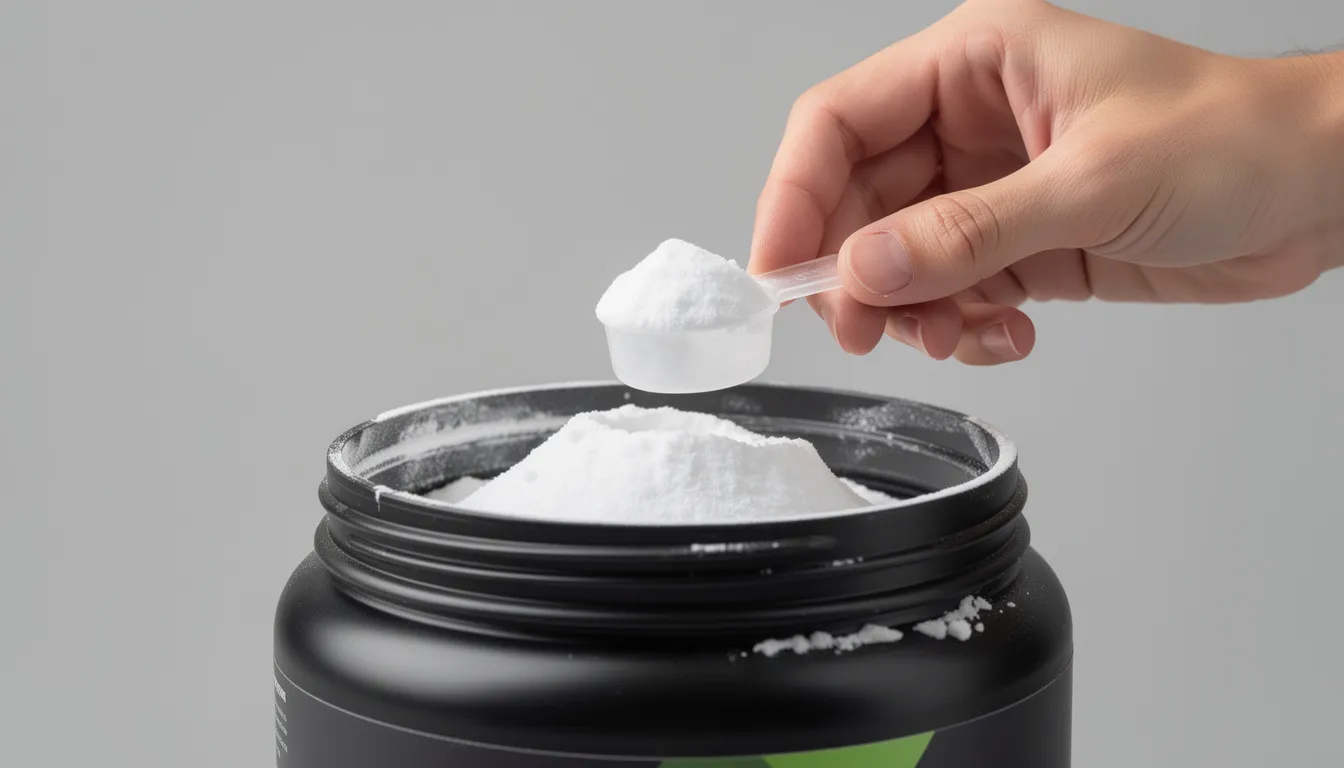
The best time to take creatine on rest days is whenever you’re most likely to remember consistently. Practical options include:
-
With breakfast, alongside your morning coffee or vitamins
-
With lunch, if you tend to eat at a consistent time
-
With dinner, especially if you usually take supplements in the evening
-
At the same time you normally take other dietary supplements
Some research suggests taking creatine with a meal containing 50–100 grams of carbohydrates and protein may slightly improve creatine uptake—by approximately 60%—through insulin-mediated transport and increased blood flow to muscles. However, this enhancement isn’t essential for most people. The critical factor is consistent intake, not perfect nutrient timing.
If you’re prone to mild stomach discomfort from creatine (which affects roughly 10–15% of users), consider splitting your dose. For example, take 2–3 grams with breakfast and another 2–3 grams with dinner. This approach reduces GI stress while still providing your full daily dose.
For workout days, taking creatine before or after exercise provides the most benefits for muscle growth and energy production. Some evidence suggests creatine shortly after exercise may be slightly superior for muscle growth due to heightened insulin sensitivity and blood flow. One 8-week study on resistance-trained athletes showed those taking creatine post-exercise gained 3% fat-free mass and improved bench press by 7.5%, compared to 1.3% and 6.8% for pre-exercise timing. But on rest days, this distinction doesn’t apply—just take it when convenient.
Choosing the Right Creatine Supplement
With so many creatine supplements on the market, selecting the right one can make a big difference in your results from creatine supplementation. The most important factor is to choose a high-quality creatine monohydrate supplement, as this form is the gold standard in sports nutrition research for increasing muscle mass, supporting muscle growth, and enhancing exercise performance.
When shopping for creatine, look for products that list 100% pure creatine monohydrate on the label, with no unnecessary fillers, artificial colors, or sweeteners. This ensures you’re getting the most effective ingredient for saturating your muscle creatine stores and supporting muscle recovery. Most research suggests that a daily dose of 3–5 grams is ideal for maintaining elevated creatine levels, whether it’s a workout day or a rest day.
Some creatine supplements are combined with carbohydrates or protein to potentially boost creatine absorption and further support muscle growth. While these added ingredients may offer some benefits, the evidence is mixed, and pure creatine monohydrate remains the most reliable choice for most people. Consider your own goals—whether you’re aiming for increased muscle mass, improved exercise performance, or faster muscle recovery—when deciding if you want a simple or more complex supplement.
It’s also worth noting that creatine supplementation can cause some water retention, leading to a slight increase in body weight. This is a normal and temporary effect, reflecting increased water content in your muscle cells rather than fat gain. If you’re tracking your body composition closely, keep this in mind as you adjust your training and nutrition plans.
For those looking to maximize their muscle creatine stores quickly, a loading phase with higher doses can be used, followed by a maintenance phase to keep creatine levels topped up. However, regardless of the approach, the key is to take creatine consistently—even on rest days—to experience all the benefits, from increased muscle mass to improved exercise performance and enhanced muscle recovery.
Ultimately, the best creatine supplement is one that fits your needs, is easy to take daily, and is backed by solid research. By choosing a reputable creatine monohydrate product and making it part of your regular routine, you’ll be well on your way to achieving your sports nutrition and fitness goals.
Benefits of Taking Creatine on Rest Days
Maintaining creatine consistently—even on rest days—delivers several advantages that compound over time.
Faster Recovery Between Sessions
Consistent daily dosing supports muscle recovery by helping restore phosphocreatine reserves and potentially reducing muscle damage markers. Meta-analyses show supplemented athletes have creatine kinase levels (a marker of muscle damage) that are 20–30% lower after intense training compared to non-supplemented groups. This translates to reduced soreness and faster readiness for your next session.
More Power and Reps Available
When you show up for your next workout with fully saturated muscle creatine stores, you have more energy immediately available for heavy lifting, sprint intervals, and explosive movements. Studies demonstrate that creatine supplementation supports 8–14% greater strength gains and 1–2 kg of increased muscle mass over 4–12 week resistance training programs.
Improved Body Composition Over Time
A 12-week resistance training program combined with creatine supplementation typically produces significantly greater improvements in body composition than training alone. College-level athletes and recreational lifters alike show these benefits when they take creatine daily throughout their training blocks.
Support for Lean Mass During Cutting
During a cutting phase, when caloric deficits can increase muscle catabolism by 15–25%, creatine exhibits anti-catabolic effects. It helps preserve muscle by inhibiting protein breakdown pathways, supporting your goal of maintaining muscle mass while losing body fat.
Additional Benefits Beyond the Gym
Emerging evidence suggests daily creatine may support cognitive function, particularly in sleep-deprived individuals or vegetarians with lower baseline brain creatine levels. Some studies show 5–15% improvements in memory and reduced mental fatigue. Research also points to potential health benefits for aging muscles and rehabilitation settings, though the primary evidence base remains focused on athletic performance.

Is It OK to Skip Creatine on a Rest Day?
Missing a single day of creatine isn’t disastrous. Your muscle creatine stores won’t suddenly plummet, and you won’t experience any immediate loss of muscle strength or mass. Think of creatine like filling a reservoir—missing one day of water input doesn’t drain the tank.
The problems arise when skipping becomes a pattern. If you only take creatine on workout days or frequently miss multiple doses per week, you’ll never achieve or maintain full muscle saturation. This prevents you from experiencing all the benefits creatine provides and essentially wastes the money you’re spending on supplements.
Here’s what happens with different levels of consistency:
|
Consistency Level |
Effect on Muscle Creatine Stores |
|---|---|
|
Daily intake (7 days/week) |
Maintains peak saturation (150–160 mmol/kg) |
|
Training days only (3–4 days/week) |
Prevents full saturation, blunts long-term gains |
|
Occasional use |
Minimal benefit above baseline |
|
Complete break (several weeks) |
Returns to baseline, requires re-loading |
If you miss a dose, simply take your usual amount the next day. There’s no need to double up to “catch up”—your body can only absorb so much creatine at once, and higher doses just mean more gets excreted unused.
Long breaks from creatine supplementation (several weeks or more) will gradually bring your muscle creatine levels back toward baseline. At that point, you’ll need another loading phase or 3–4 weeks of steady intake to rebuild saturated levels.
To avoid forgetting on rest days—when you’re not in “gym mode”—build a simple habit:
-
Keep creatine next to your coffee maker
-
Store it with your morning vitamins
-
Place it near your toothbrush as a visual reminder
-
Set a daily phone alarm
Safety, Side Effects, and Who Should Be Cautious
Creatine monohydrate is one of the most researched sports nutrition supplements in existence. Since the early 1990s, numerous trials involving healthy adults have demonstrated good short- and medium-term safety at typical doses. Long-term studies extending up to 5 years show no adverse effects at the recommended dosage of 3–5 grams daily.
Common Side Effects
Most side effects are mild and manageable:
-
Water retention: Initial weight gain of 1–3 kg, primarily from increased intracellular water in muscles. This isn’t fat gain—it’s part of how creatine works to enhance cellular hydration.
-
Stomach discomfort: Occasional bloating or GI upset, usually reduced by taking creatine with food and splitting doses.
-
Non-response: About 20–30% of the population (often those with naturally high baseline stores) may see minimal additional benefits.
Who Should Consult a Doctor
While healthy adults generally tolerate creatine well, certain groups should speak with a healthcare provider before starting daily creatine supplementation:
-
People with existing kidney disease or reduced kidney function (creatinine clearance below 60 ml/min)
-
Those with significant liver issues
-
Anyone taking medications that affect kidney or liver function
-
Individuals with a history of kidney stones
The myth that creatine damages healthy kidneys has been thoroughly debunked by over 20 years of research showing no glomerular changes in healthy individuals at recommended doses.
Hydration Reminder
Stay generally well-hydrated when taking creatine, as it slightly increases intracellular water needs. A simple target: ensure your urine remains pale yellow throughout the day. You don’t need to dramatically increase water intake, but severe dehydration combined with high-dose creatine (above 20g chronically) could theoretically stress the kidneys.
No supplement replaces the fundamentals of proper training, adequate sleep, and balanced nutrition. Creatine is a tool that enhances your efforts—it doesn’t substitute for them.
How to Fit Creatine Into Your Weekly Training and Rest Schedule
Making creatine a seamless part of your routine eliminates the mental effort of deciding whether to take it each day. Here’s how to implement this starting this week.
Example Weekly Schedule
Consider a typical training week:
|
Day |
Training |
Creatine Dose |
Timing |
|---|---|---|---|
|
Monday |
Heavy squats |
5g |
Post workout with protein shake |
|
Tuesday |
Rest |
5g |
With breakfast |
|
Wednesday |
Upper body |
5g |
Post workout with protein shake |
|
Thursday |
Rest |
5g |
With breakfast |
|
Friday |
Deadlifts |
5g |
Post workout with protein shake |
|
Saturday |
Conditioning |
5g |
Post workout with protein shake |
|
Sunday |
Rest |
5g |
With breakfast |
Notice that the dose stays identical every single day. The only thing that changes is timing—post-exercise on training days and with a meal on full rest days.
Building the Habit
When starting a 10–12 week strength program, introduce creatine at the beginning and maintain the same daily dose throughout. Whether it’s a day for heavier weights, light cardio, or complete rest, your creatine intake remains constant.
A simple strategy: pair creatine with another fixed habit. Take it with your post workout protein shake on training days. On rest days, take it with breakfast alongside your morning coffee. This approach leverages habit stacking—attaching a new behavior to an existing routine.
Consistency Over Perfection
The main goal is making creatine supplementation automatic. You shouldn’t need to actively think about whether today is an “on” or “off” day for supplements. Daily dosing means daily dosing, regardless of what’s happening in the gym.
If you travel, pack single-serving creatine packets or a small container. If you’re on vacation, continue taking your maintenance dose to keep muscle creatine stores saturated. When you return to training, you’ll pick up exactly where you left off without needing to reload.
For optimal results with resistance training adaptations, combine consistent creatine intake with progressive overload, adequate protein (around 1.6–2.2g per kg body weight), and sufficient sleep. Creatine enhances your training—it doesn’t replace the work.

FAQ
Do I need a loading phase if I only train 2–3 days per week?
A loading phase is optional regardless of your training frequency—it simply fills your muscles faster. Whether you train 2 days or 6 days per week, daily 3–5 grams of creatine monohydrate daily will bring you to full saturation within about 3–4 weeks. Loading (20g/day for 5–7 days) just accelerates this timeline. Your training volume doesn’t change the fundamental biology of how creatine stores accumulate.
Should I stop creatine during a deload week or vacation?
It’s generally better to keep taking creatine through deload weeks and short breaks from training. Maintaining your muscle creatine levels during lighter training periods means you’re fully primed when you resume hard training. The supplement is inexpensive enough that continuing through rest periods makes more sense than cycling off and needing to rebuild saturation.
Can I take creatine at night on rest days, or will it affect my sleep?
Creatine is not a stimulant like caffeine and typically does not interfere with sleep. You can take it at any time of day, including before bed, without issues. Unlike a pre workout supplement, creatine doesn’t provide immediate energy—it builds up in your system over time. Most people experience no significant difference in sleep quality regardless of when they dose.
Is it worth taking creatine on rest days if my diet is high in red meat and fish?
Even high-meat diets typically provide only about 1–2 grams of creatine per day from food sources. This amount maintains baseline levels but doesn’t maximize muscle saturation the way supplementation does. Adding 3–5 grams daily through creatine supplements can still elevate your stores 10–40% beyond what diet alone achieves. The same “daily including rest days” logic applies regardless of dietary protein sources.
Do women need to take the same dose of creatine on rest days as men?
Most research uses similar daily doses (around 3–5 grams) for both men and women, and sex does not drastically change the basic dosing strategy. Body size and individual tolerance matter more than gender. Some registered dietitian recommendations suggest adjusting slightly based on body weight (approximately 0.03–0.05g per kg), but 3–5 grams remains the practical range for nearly all adults. Women experience comparable benefits in muscle strength and improved endurance when maintaining consistent intake.



Leave a comment
This site is protected by hCaptcha and the hCaptcha Privacy Policy and Terms of Service apply.