

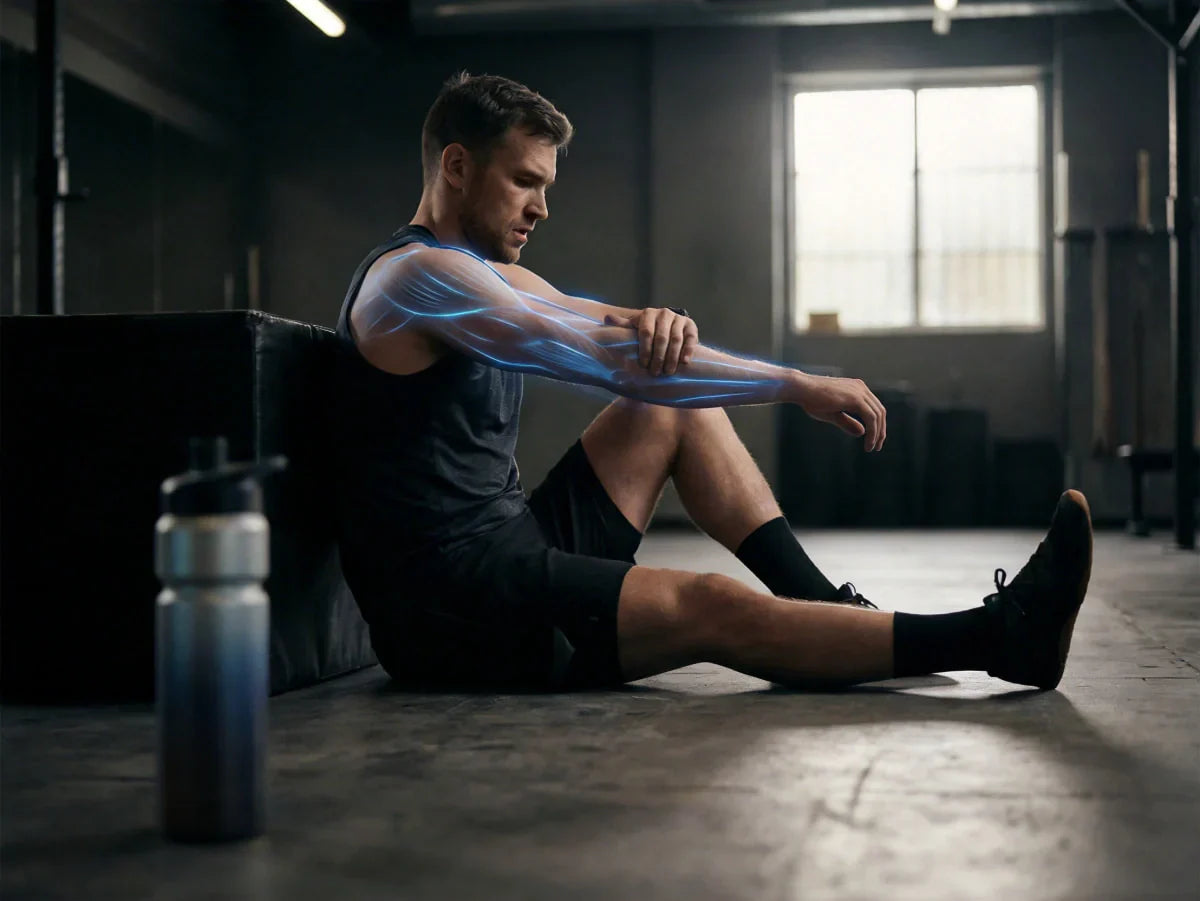
Creatine modestly but consistently supports recovery after hard training, especially for high-intensity and resistance exercise. Here’s what the research tells us:
-
Creatine mainly helps recovery by speeding ATP resynthesis, slightly reducing muscle damage and inflammation, and allowing higher training volume over weeks of consistent use.
-
Research from approximately 1995–2024 shows stronger evidence for acute recovery (24–72 hours after a workout) than for long-term protection from muscle damage.
-
The best-studied form is creatine monohydrate at 3–5 g/day, which is generally safe for healthy adults when taken consistently.
-
Benefits are smaller or less relevant for pure endurance sports, and creatine can increase body mass by 1–2 kg via water retention.
-
Many athletes and active individuals use creatine not just for improved performance, but specifically to bounce back faster between training sessions.
What Is Creatine?
Creatine is a naturally occurring compound synthesized from three amino acids: arginine, glycine, and methionine. Your liver and kidneys produce it internally, and the vast majority gets stored in skeletal muscle as either free creatine or phosphocreatine.
-
It’s not a protein-building amino acid, but rather a small nitrogenous molecule specifically involved in rapid energy production during intense efforts.
-
Typical body stores range from approximately 120–160 mmol/kg of dry muscle in people who eat meat regularly. About 1–2 grams per day gets broken down and excreted as creatinine.
-
Roughly half of your daily creatine needs come from dietary sources like beef, pork, and fish. The other half comes from internal synthesis.
-
At a high level, phosphocreatine donates a phosphate group to ADP to regenerate adenosine triphosphate (ATP) during very short, intense efforts lasting up to about 10 seconds.
This makes creatine different from other supplements you might encounter in sports nutrition. It’s already present in your body and plays a direct role in how your muscles produce more energy during strenuous exercise.
Types of Creatine
When it comes to creatine supplementation, there are several different forms available, each with its own characteristics and potential benefits for muscle mass, muscle recovery, and athletic performance. Understanding these options can help you make an informed choice that best supports your training goals.
Creatine Monohydrate is by far the most popular and extensively researched form of creatine. It’s the standard used in the vast majority of studies on muscle strength, muscle growth, and enhanced training adaptations. Creatine monohydrate is well-known for its ability to increase muscle creatine stores, support faster recovery, and improve muscle performance during resistance training and other high-intensity activities. It’s also cost-effective and widely available, making it the go-to choice for most athletes and active individuals.
Other forms of creatine include:
-
Creatine Citrate: This version is creatine bound to citric acid, which may improve solubility in water. Some believe it’s easier on the stomach, but research shows no significant differences in muscle mass or recovery compared to creatine monohydrate.
-
Creatine Malate: Combining creatine with malic acid, this form is marketed for improved energy production and reduced fatigue. While it may offer some benefits for endurance, there’s limited evidence that it outperforms monohydrate for muscle recovery or strength.
-
Creatine Pyruvate: This form links creatine with pyruvic acid, aiming to boost energy and endurance. However, studies have not shown clear advantages over creatine monohydrate for muscle performance or faster recovery.
-
Micronized Creatine: This is simply creatine monohydrate processed into smaller particles, which can make it easier to mix and potentially gentler on the stomach. The effects of creatine supplementation remain the same as with regular monohydrate.
-
Liquid Creatine: Marketed for rapid absorption, liquid creatine is less stable and may degrade over time, reducing its effectiveness. There’s not enough evidence to recommend it over powdered forms.
When choosing a creatine supplement, it’s important to consider not just the type, but also product quality and third-party testing to ensure purity and safety. For most people, creatine monohydrate remains the best-supported option for building muscle, improving muscle recovery, and supporting athletic performance.
If you have kidney disease or other health concerns, consult a healthcare professional before starting creatine supplements, as they can affect kidney function in those with pre-existing conditions. For healthy adults, research consistently shows that creatine monohydrate is safe when taken at recommended doses, but more research is needed to fully understand the effects of creatine supplementation in older adults and other special populations.
While creatine can help increase muscle mass, support enhanced training adaptations, and promote faster recovery, it works best when combined with a balanced diet, adequate calorie and protein intake, and a well-structured exercise program. Some individuals may experience mild side effects such as stomach upset or water retention, but these are generally temporary and can often be managed by taking smaller doses and staying well-hydrated.
In summary, creatine supplements—especially creatine monohydrate—are a proven, effective way to support muscle growth, muscle recovery, and improved performance for most active individuals. As with any dietary supplement, use them thoughtfully and as part of a comprehensive approach to sports nutrition and training.
How Does Creatine Work in the Body?
The “phosphocreatine system” is your fastest energy pathway for high-intensity physical activity. When you need to produce maximum force quickly—like during a heavy squat or a sprint—this system kicks in before slower metabolic processes can catch up.
-
During intense exercise, phosphocreatine buffers ATP levels by rapidly donating its phosphate group. During rest periods, ATP restores phosphocreatine levels, completing the cycle.
-
Supplementing with oral creatine can increase intramuscular creatine and phosphocreatine stores by roughly 10–40%, depending on your baseline diet and existing muscle levels.
-
Higher phosphocreatine means better ability to repeat sprints or heavy sets with faster recovery of force-production potential between bouts.
-
Secondary mechanisms relevant to muscle recovery include cell swelling (an osmotic effect that may trigger anabolic signaling), possible upregulation of IGF-1 and mTOR pathways, and mild antioxidant properties that may reduce inflammation and oxidative stress.
-
The cell swelling effect also influences satellite cells, which are involved in how muscle fibers heal after training-induced damage.
Think of creatine as providing your muscles with a larger “battery” for short-duration, high-intensity work. The bigger the battery, the faster you can recharge between efforts.

Does Creatine Help With Recovery After Exercise?
Yes, creatine can support several aspects of recovery—including force restoration, muscle damage markers, and inflammation—but the effects of creatine are modest and context-dependent. The strongest evidence points to faster recovery when you need to perform again within 24–72 hours.
-
Many controlled trials between 2000–2023 show lower creatine kinase, lactate dehydrogenase, and inflammatory markers with creatine supplementation versus placebo after muscle-damaging exercise.
-
A 2022–2023 systematic review and meta analysis examining creatine monohydrate and exercise-induced muscle damage found lower muscle damage markers after a single bout, but more mixed results over chronic training periods.
-
Some studies in resistance training show faster recovery of maximal voluntary contraction and torque between training sessions when athletes take creatine consistently.
-
Not every study reports less soreness (DOMS). Subjective soreness improvements are inconsistent even when blood markers improve, suggesting that how you feel may not always match what’s happening at the cellular level.
-
The stronger, more consistent benefit is “functional recovery”—your ability to perform at a high level in the next session—rather than completely preventing soreness.
One specific study by Cooke and colleagues found that creatine supplementation (0.3 g/kg/day for 5 days prior to exercise, followed by 0.1 g/kg/day for 14 days post-exercise) significantly reduced markers of muscle damage and hastened recovery of muscle function following eccentric resistance exercise. This matters because eccentric exercise—where muscles lengthen under load—typically causes the most severe muscle injuries and requires the longest healing process.
Creatine and Different Types of Recovery
Recovery is multi-dimensional. It encompasses strength restoration, muscle damage repair, soreness management, systemic stress response, and rehabilitation from injury or immobilization. Creatine’s effects vary across these domains.
Recovery of Force Production
Creatine can speed the return of muscular strength and power between sets within a single workout and between sessions 24–48 hours apart. This is the most consistent finding in the research, supported by the direct mechanism of enhanced training adaptations through faster ATP resynthesis.
Muscle Damage and Inflammation
Creatine supplements often reduce peaks in creatine kinase, LDH, and some inflammatory cytokines (like IL-6 and CRP) after intense exercise that would otherwise create micro tears in muscle tissue. This appears particularly relevant for eccentric or high-impact training.
Delayed Onset Muscle Soreness (DOMS)
Some trials show slightly less soreness with creatine use, while others show no significant differences. Reduced soreness is not guaranteed, and this is an important consideration when setting expectations.
Oxidative Stress
Creatine has mild antioxidant properties. Some studies report lower markers of lipid peroxidation and oxidative damage post-exercise, though this area needs further research to establish definitive conclusions.
Thermoregulation and Hydration
Creatine’s “hyper-hydrating” effect can support fluid balance and possibly tolerance to heat during repeated hard efforts. This indirectly supports recovery in hot conditions, though it’s not a primary mechanism.
Acute vs Chronic Effects: The “Paradox” in Muscle Damage
Here’s something that initially seems contradictory: creatine tends to reduce markers of muscle damage after a single hard session, but during long-term training blocks, it may be associated with higher damage markers. The explanation? When you recover faster, you can train harder.
Acute Use (Days)
When creatine is loaded before one damaging workout—like downhill running or heavy eccentric lifting—pooled data from the placebo group comparisons show smaller rises in CK and LDH at 48–90 hours afterward compared with those not taking creatine.
Chronic Supplementation (Weeks to Months)
Some studies and meta analyses report higher muscle damage markers at 24 hours during training blocks in creatine groups. This likely reflects greater training load and subsequent adaptation, not harm. Athletes taking creatine can often handle more volume and training intensity.
Interpreting the Data
Higher chronic damage markers with creatine are usually accompanied by better strength gains, muscle growth, and improved performance over 8–12 weeks of training. The muscle damage is a signal of adaptation, not injury.
Practical Implications
Coaches and athletes should understand that this “paradox” means creatine helps recovery between hard sessions while also enabling you to push harder overall. This can transiently elevate stress markers without causing pathological damage at recommended doses.
Current evidence does not suggest creatine causes harmful muscle damage when used properly. The European Journal of Applied Physiology and sports medicine literature consistently support this conclusion.
Creatine for Injury, Immobilization, and Rehabilitation
Recovery can also mean returning from disuse, immobilization, or rehabilitation post-injury. Creatine has been studied in these contexts with mixed but promising findings.
What Happens During Immobilization
Limb casting or bed rest leads to loss of muscle cross-sectional area, reduced phosphagen content, and impaired neuromuscular function. This decline in fat free mass and muscle performance can be substantial even over just a few weeks.
Evidence for Creatine’s Role
Research suggests creatine can help maintain intramuscular phosphocreatine and possibly slow atrophy in some immobilization models. Limb casting studies over 2–8 weeks show variable results, but some demonstrate preserved muscle function.
Hespel and associates found that during rehabilitation from immobilization, creatine supplementation promoted increases in myogenic regulating factor 4 (MRF4) and myogenic protein expression. This was associated with approximately 10% greater muscle fiber area and 25% greater peak strength during the rehabilitation phase.
Proposed Mechanisms
Cell swelling, stimulation of anabolic signaling through IGF-1 and mTOR, and better training quality during rehabilitation once movement resumes all contribute to injury recovery benefits.
Important Caveats
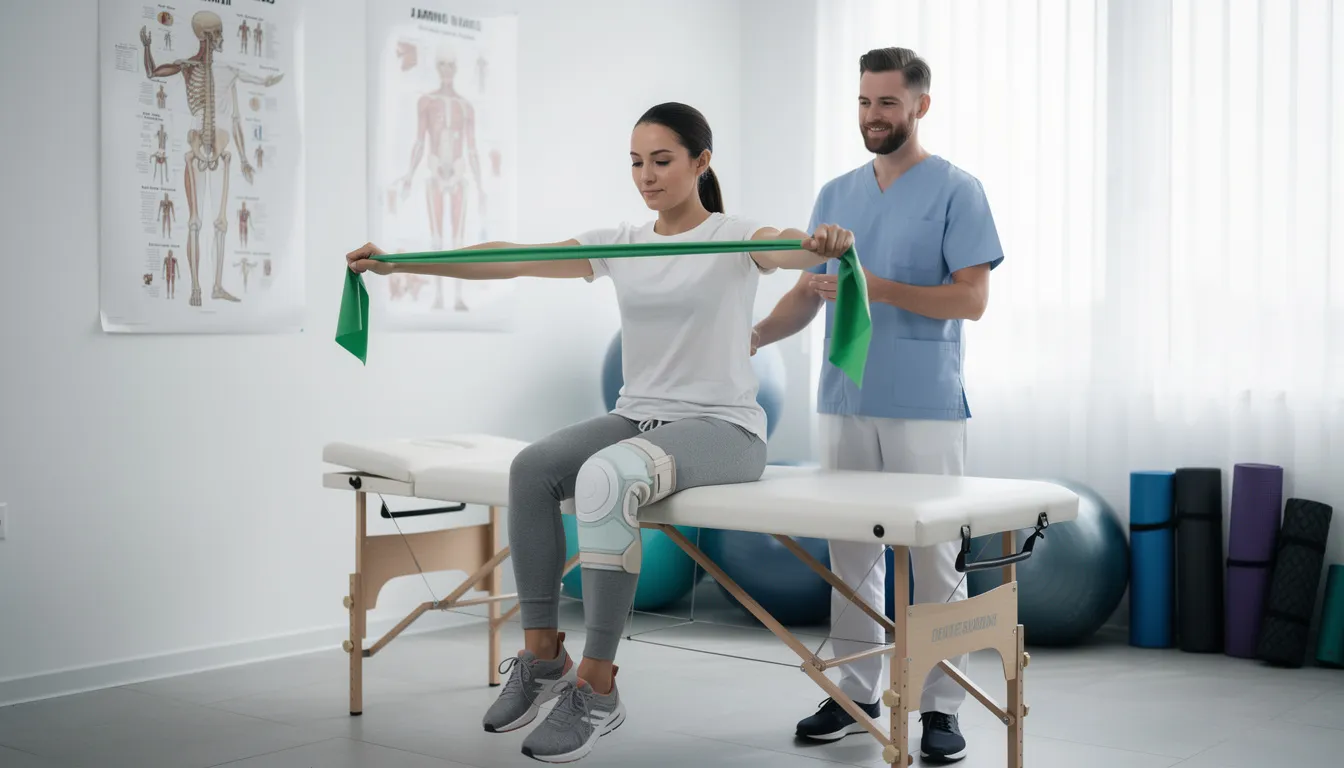
Creatine is not a stand-alone rehab treatment. It should be viewed as a supportive dietary supplement alongside progressive physical therapy and adequate protein intake. Limited data exists in clinical injury populations, and medical supervision is warranted when using creatine around surgery or in people with comorbidities.
Who Benefits Most From Creatine for Recovery?
Individual response varies, and certain groups see more pronounced recovery benefits from creatine supplementation.
Strength and Power Athletes
Weightlifters, powerlifters, sprinters, and team-sport athletes benefit the most. These sports involve repeated high-intensity efforts where phosphocreatine turnover is critical for sport performance. The ability to recover between sets and training sessions directly impacts results.
High-Volume Resistance Trainees
Those performing strength training with many hard sets per week find that creatine helps sustain performance across sessions. This indirectly improves recovery by reducing performance drop-off and enabling you to build muscle more effectively.
Vegetarians and Vegans
These populations typically have lower basal muscle creatine stores due to limited dietary intake. They experience a larger increase when supplementing, with potentially more noticeable recovery and exercise performance gains.
Older Adults
Research shows that creatine combined with resistance training can improve strength, lean mass, and functional recovery compared with training alone. This is particularly relevant given that recovery capacity naturally declines with age. Harvard Health Publishing has noted creatine’s potential benefits for aging populations, and early research on bone health is also encouraging.
Endurance Athletes
Direct recovery benefits exist mainly for high-intensity intervals, hill sprints, or strength sessions. For long steady-state events, effects of creatine supplementation are smaller, and potential weight gain from water retention can be a disadvantage. More research is needed to clarify benefits for pure endurance applications.
How to Take Creatine for Recovery
The same dosing strategies used for athletic performance also apply when your main goal is faster recovery between training sessions.
Loading Protocol
The common approach involves approximately 20 g/day of creatine monohydrate (split into 4 × 5 g doses) for 5–7 days, then maintenance at 3–5 g/day. This saturates muscle stores quickly and is useful if you want rapid results.
No-Load Approach
Taking 3–5 g/day from day one will also saturate stores over approximately 3–4 weeks. This is a simpler strategy that avoids taking larger initial doses. Many people wondering how much creatine to take prefer this approach for its simplicity.
Timing
Daily consistency matters more than exact timing. However, some data suggest slightly better uptake when taken with meals, especially those containing carbohydrates and protein. Taking creatine post-workout with a protein shake is a popular strategy.
Form Selection
Creatine monohydrate is the best-studied, most cost-effective form for both performance and recovery. Other forms (HCl, ethyl ester, buffered) have no proven superiority despite marketing claims about absorption.
Practical Tips
|
Recommendation |
Details |
|---|---|
|
Mixing |
Dissolve in water or a non-acidic beverage |
|
Dose splitting |
Smaller doses (3–5 g) reduce stomach upset |
|
Hydration |
Drink adequate amounts of water throughout the day |
|
Consistency |
Take daily, including rest days |
|
Storage |
Keep in a cool, dry place |
Safety, Side Effects, and Who Should Be Cautious
Creatine monohydrate has been studied for decades and is considered safe for healthy adults at typical doses, including long-term use up to at least 5 years in research settings. The International Society of Sports Nutrition considers it among the most well-researched ergogenic aid options available.
Common Benign Effects
-
Transient water retention and slight surplus in body weight
-
Small rapid weight gain of approximately 1–2 kg
-
Occasional mild stomach upset or cramping if large single doses are taken
Kidney and Liver Health
Extensive data show no harm to kidney function in healthy people at 3–5 g/day. However, those with pre-existing kidney disease, uncontrolled hypertension, or liver issues should consult a physician before use. Creatine does not affect kidney function in those without underlying conditions.
Drug and Condition Considerations
Extra caution is warranted for:
-
People on nephrotoxic medications (certain NSAIDs, chemotherapy agents)
-
During pregnancy or breastfeeding
-
Individuals with complex medical histories
Quality Control
Choose third-party-tested products (NSF Certified for Sport, Informed Sport) due to variable supplement regulation and contamination risk. A popular supplement isn’t always a pure supplement.
Myth Clarification
Creatine is not an anabolic steroid and does not directly raise testosterone. It does not inherently damage muscles. When muscle damage markers rise with creatine use, it’s typically because training harder creates more adaptation stimulus—not because creatine has negative effects.
Practical Recovery Tips: Combining Creatine With Other Strategies
Creatine is only one piece of an overall recovery plan. Sleep, nutrition, stress management, and training design form the foundation. Creatine works best when these elements are already in place.
Sleep
Aim for 7–9 hours per night with consistent sleep-wake times. This is the foundation of recovery, with creatine serving as a secondary aid. No supplement can compensate for chronic sleep deprivation.
Protein and Calorie Intake
Consuming 1.6–2.2 g/kg/day of protein and sufficient total calories is critical for muscle repair. Creatine works best in this nutritional context and can be combined with a protein shake post-workout for convenience. For muscle mass gains, maintain a slight surplus in calorie intake.
Hydration and Electrolytes
Because creatine draws water into muscle cells, staying well-hydrated and replenishing sodium, potassium, and magnesium supports both performance and recovery.
Training Programming
Periodized training with planned deloads and appropriate volume is more important than any supplement for long-term recovery. Many factors influence recovery capacity, and programming should account for individual needs.
Synergistic Supplements
Combining creatine with carbohydrates and protein post-workout may slightly enhance uptake. Beta-alanine or HMB may provide additional training tolerance benefits in some contexts, though creatine alone is already effective. Other supplements should be evaluated individually.
Frequently Asked Questions
How long does it take before creatine improves my recovery between workouts?
With a loading phase (20 g/day for 5–7 days), many people notice better performance and faster strength recovery within the first week. Without loading, benefits usually appear after 3–4 weeks of consistent 3–5 g/day dosing as muscle stores gradually saturate.
Should I stop taking creatine on rest days or when I’m injured?
No. Creatine works by maintaining elevated muscle stores, so continue taking it on rest days. During injury or immobilization, it may help preserve muscle and support the healing process. However, individuals with medical issues should consult their physician first.
Can creatine help reduce joint pain or tendon soreness after training?
Creatine mainly affects muscle energy systems and muscle damage markers, not joint cartilage or tendons directly. It may indirectly reduce overall discomfort by improving muscle function and reducing muscular fatigue, but it’s not a targeted treatment for joint or tendon pathology. There isn’t enough evidence to recommend it specifically for joint issues.
Is creatine useful for recovery if I only do cardio, like long-distance running or cycling?
Creatine offers modest benefits mainly for high-intensity intervals and sprint finishes. For long, steady endurance work, recovery effects are small and the extra body weight from water retention can even be a disadvantage. Endurance athletes focused on brain health benefits or high-intensity interval sessions may still find value.
What happens to my recovery if I stop taking creatine after months of use?
Muscle creatine levels gradually return to baseline over 3–4 weeks. Any water-related weight gain is lost, and performance and recovery return to pre-supplement levels. There’s no known withdrawal effect or rebound damage—your body simply returns to its natural creatine synthesis and storage levels.


Leave a comment
This site is protected by hCaptcha and the hCaptcha Privacy Policy and Terms of Service apply.